
26. 6. 2024 - Josef Brynda
Market Overview US equities are set to rise following a tech rally in Europe. Rivian gets a boost from Volkswagen's investment, and US options traders bet on rate cuts.
Interest Rate Cuts European stocks climbed after a policymaker suggested two more rate cuts for the euro area this year. Gains were led by Nvidia’s rally, lifting the S&P 500.
Rivian's Surge Rivian Automotive soared 50% postmarket, recovering half its year-to-date losses after securing a $5 billion deal with Volkswagen. VW gains access to Rivian’s EV technology and collaboration on new battery-powered vehicles.
Bold Bets on Rate Cuts US traders are betting on a 300 basis point rate cut by the Federal Reserve within nine months, a hedge against a potential economic downturn.
Archegos Trial Bill Hwang’s family office is on trial, exposing Wall Street's questionable practices. Evidence reveals the chaotic final days of Archegos.
Economic Insights Today’s focus includes MBA mortgage applications and new home sales data. Earnings reports from Micron, Blackberry, Levi Strauss, Jefferies, and General Mills are anticipated.
Key Reads
Joe’s Thoughts Joe analyzes Fed policy risks and inflation concerns, noting the potential for rising unemployment and challenges in managing inflation.

24. 6. 2024 - Josef Brynda
The head of the International Monetary Fund on Thursday called on Europe to achieve the full potential of its prized single market, lamenting what she described as a situation that makes the region look like “an ideas supermarket” for the U.S.
Speaking to CNBC’s Karen Tso, IMF Managing Director Kristalina Georgieva said Europe’s economic performance was strengthening and inflation was clearly on a downward trajectory.

19. 6. 2024 - Josef Brynda
Money markets are now pricing in a 30% chance of a cut in August, compared to 45% before the data was released. There’s one quarter-point cut fully priced for this year, by November, with a 60% chance of a second reduction — down from 80% on Tuesday.
Although the headline inflation number slowed to the central bank’s target for the first time in almost three years, traders are betting that the closely-watched services sector number will keep policymakers cautious. Expectations for BOE rate cuts have fallen sharply since the start of the year, when the market was betting on as many as six reductions.
The central bank is widely expected to keep rates on hold at 5.25% when it meets on Thursday.

17. 6. 2024 - Josef Brynda
LONDON, June 17 (Reuters) - The pound eased modestly on Monday, ahead of a policy meeting by the Bank of England this week at which the central bank is not expected to cut interest rates, but might telegraph the likely timing of the first drop.
Political turmoil in France last week rattled risk appetite and sent investors fleeing from French assets and the euro which fell 0.6% against sterling last week .
By Monday, the euro had recovered some stability, rising 0.1% against the pound to 84.46 pence.
Against the dollar, the pound has fared less well, falling 0.6% last week, in its largest weekly slide in two months. Sterling was last down 0.1% at $1.2674.Recent data has shown inflation in the United States is not slowing as quickly as many had anticipated, while the Federal Reserve has said it sees only one rate cut this year.
Meanwhile, UK headline consumer inflation is falling towards the BoE's 2% target and markets are increasingly convinced the central bank, which meets on Thursday, will deliver two cuts this year, with close to a 90% chance of rates dropping to 4.75% by December.

13. 6. 2024 - Josef Brynda
On Wednesday, the Federal Reserve revised its outlook for interest rate policy in 2024, signaling just one cut instead of the three seen back in March.
A disappointing outlook on the surface for investors hoping for more reductions to interest rates this year — but as Fed Chair Jerome Powell reminded us, the projection is hardly set in stone.
As has often been the case, Powell reiterated that the projections are just a "forecast" and don't reflect a "really strong commitment to a particular rate path."

4. 6. 2024 - admin admin
Česká národní banka vytáhla do boje proti takzvaným patnáctkovým fondům. Ty se v posledních letech staly symbolem netransparentních a mnohdy i pochybných investic, když kvazifondy jako J.O. Investment, Growing Way či Cryfin zpronevěřily investorům stamiliony až miliardy korun. Během května dostaly desítky těchto neregulovaných fondů od centrální banky pokutovou výstrahu za to, že tajily, jakým způsobem investují peníze svěřené od investorů. I přes pravidelné tresty ČNB se řady těchto fondů stále rozrůstají. Důvodem jsou vedle relativně nízkých sankcí i svázané ruce centrálních bankéřů, kteří na tento trh mají jen omezené páky. Učinit přítrž nekalým fondům tohoto typu má až od července legislativní novela. Jak ale upozorňují experti, bez revoluce ve finanční gramotnosti Čechů zůstanou tyto investice pastí na peníze i nadále.

30. 5. 2024 - Josef Brynda
High interest rates indeed benefit the wealthiest Americans, who are the driving force behind the surprising economic growth, and make it harder for the Fed to push through the desired rate cuts. The simplified theory of raising and lowering interest rates is straightforward - lower rates foster faster economic growth, while higher rates slow down the economy. However, experiences from the past 18 months of the U.S. economy are making the latter assumption harder to swallow. "In terms of income, those who earn more than $100,000 expressed the greatest increase in confidence," said Dana Peterson, Chief Economist at the Conference Board, in a press release. "Based on a six-month moving average, confidence remained highest among the youngest (under 35) and wealthiest (earning more than $100,000) consumers." Financial commentator Josh Brown suggested that high rates could prolong the current bout of inflation due to the advantages that higher rates provide to the wealthiest Americans. Wealthy households can now earn up to 4.5% on high-yield savings accounts, their stock portfolios have grown by 20% in a year, and they are watching as the value of their real estate climbs. These individuals desire nothing more than for rates to stay high.
28. 5. 2024 - Josef Brynda
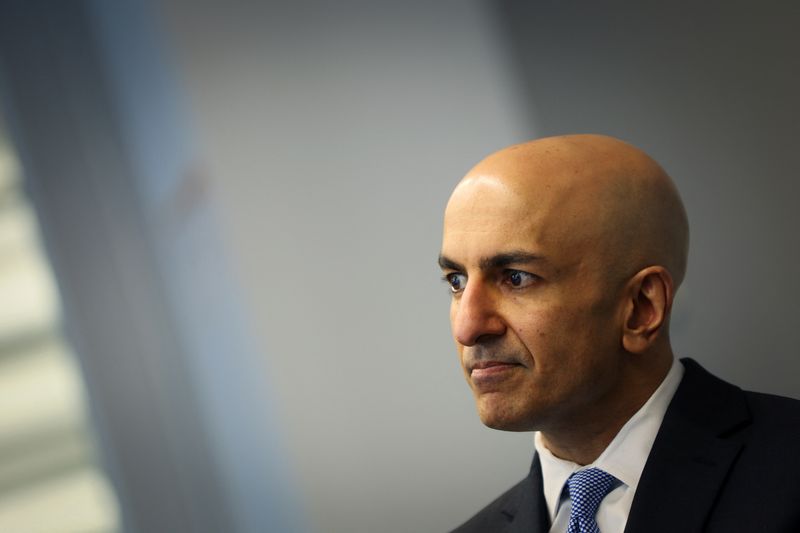
The Federal Reserve should wait for more substantial progress on inflation before considering interest rate cuts, Minneapolis Federal Reserve President Neel Kashkari told CNBC on Tuesday.
When asked about the conditions for rate cuts in 2024, Kashkari said, “Many more months of positive inflation data, I think, to give me confidence that it’s appropriate to dial back.”
The Fed official also didn't rule out further rate hikes if inflation persists, saying that the central bank shouldn’t rule anything out at this point.

24. 5. 2024 - Josef Brynda
A two-speed global economy skewed by US strength is overshadowing this week’s Group of Seven meeting as officials confront the prospect of less synchronized monetary policies.
Finance ministers in the lakeside resort of Stresa on Friday are weighing the durability of America’s growth momentum against the perennial sickliness of Europe’s expansion — colored by nearby geopolitical tensions — and pondering the implications for financial