26. 3. 2025 - Josef Brynda
As we mentioned earlier, fears of a recession in the U.S. appear to be somewhat overblown. Today's data showed that durable goods orders are near record highs this year, indicating strong consumer and business demand. At the same time, the labor market remains stable and resilient.
A key factor in confirming this positive trend will be tomorrow’s GDP data, which could provide a clearer picture of the overall health of the U.S. economy. Another supportive signal comes from Donald Trump's statement regarding reciprocal tariffs, which are set to be more specifically targeted at selected segments on April 2. This move could help ease concerns about escalating trade disputes and, in turn, reduce fears of a recession.
Overall, despite some uncertainties, economic data continues to point to solid fundamentals that should prevent a significant slowdown in economic growth.

19. 3. 2025 - Josef Brynda
The dollar strengthened against major global currencies this morning in anticipation that interest rates will remain unchanged, according to CME Group. Its strength was also supported by weaker-than-expected data from the eurozone regarding the consumer price index. On the other hand, the approval of the stimulus package did not provide significant support to the euro, possibly because the Greens are demanding that part of the planned fund be invested in environmental innovations, which investors in Europe often perceive as a negative factor.
At the same time, yesterday's data from the U.S. almost ruled out concerns about a current recession, as industrial production showed a growth of around 0.7%. Additionally, labor market data also indicate stability. Overall, it can be said that U.S. fundamental data remain strong, but investor sentiment has been unsettled due to the unpredictability of government policy. The foreign exchange market is currently experiencing ideal yet often difficult-to-predict movements.
As I mentioned earlier, it will be crucial to follow Jerome Powell’s speech today at 19:00, where he will comment on the current and future economic outlook. Based on observed data, it can be assumed that Powell will not rush into further rate cuts this year, and we rather expect only two reductions, provided that the economy demonstrates resilience. These cuts could then lead to a neutral interest rate.
However, more than ever, it is now essential to monitor investor sentiment. Market sentiment has recently pushed the euro up by approximately 5% against the dollar.

18. 3. 2025 - Josef Brynda
Today, March 18, 2025, an extraordinary session is taking place in the German Bundestag, where lawmakers are debating a comprehensive financial package aimed at strengthening defense and investing in infrastructure. This package includes a reform of the so-called debt brake, a constitutional measure limiting the country's debt, with the goal of enabling higher defense spending. The proposal has been put forward by the parties of the likely new governing coalition, the conservative CDU/CSU alliance and the Social Democratic Party (SPD), and they are also negotiating support with the Green Party.
The proposal includes the creation of a €500 billion investment fund, which would be used for infrastructure modernization, such as roads, railways, and energy networks. This fund would be financed through loans, which requires an amendment to the existing debt brake. A two-thirds majority in parliament is needed to approve these changes, which is why intense negotiations with other parties are taking place.
The future chancellor, Friedrich Merz, has emphasized the necessity of this step in response to current geopolitical threats and the need to strengthen the defense capabilities of Germany and Europe. He also pointed to the weakening alliance with the United States under President Donald Trump, which increases the need for European defense autonomy.
We can say that if German debt leads to economic growth and higher inflation, the ECB may raise interest rates. Higher rates attract investors and strengthen the euro. Additionally, capital inflows into Europe and expectations of increased demand can further push the euro higher.

25. 2. 2025 - Josef Brynda
German elections
The German elections were won by the conservative CDU/CSU union with 28.52% of the vote. The far-right party AfD finished second with a record result of 20.8% and expressed its ambition to co-shape political developments in Germany. However, the winning party firmly rejected this possibility.
AfD, together with the left-wing party Die Linke, secured what is known as a blocking minority, which could enable them to obstruct CDU/CSU’s planned reforms on the debt brake and military modernization. This suggests that negotiations will be complex.
Following the election results, the euro initially strengthened against the dollar by up to 0.7% in anticipation of responsible fiscal policies. However, the subsequent weakening of the euro was likely caused by uncertainties surrounding coalition negotiations and the potential blocking minority formed by AfD and Die Linke.
Coalition talks are expected to take place primarily with the SPD, with whom the CDU/CSU collectively secured 328 seats out of 630. Merz, the incoming chancellor, is striving to expedite negotiations as much as possible to prevent political stagnation.
German economy
While elections took place in Germany, the country’s economy continues to struggle. According to the latest GDP data, economic output declined by 0.2% in the fourth quarter of 2024, confirming a second consecutive year of economic contraction. Forecasts for 2025 predict growth of just 0.3%, significantly lower than the initial estimates.
The main issues include an industrial slowdown, particularly due to high costs in the automotive sector, as well as the ongoing war in Ukraine, which has led to higher energy costs. Additionally, weak consumer confidence remains a challenge, as stagnating wages continue to impact the labor market.

12. 2. 2025 - Josef Brynda
The latest inflation data for the USA has just been released. The actual figures were higher than expected, which led to a nearly 1% strengthening of the USD compared to today's local high. The data suggests that the Federal Reserve (FED) may continue tightening monetary policy, as accelerating inflation poses a risk to long-term price stability. At the same time, with the US imposing tariffs that create pro-inflationary pressures, the FED may not be in a hurry to take further action.
This trend could lead to parity between EUR and USD, which is no longer an entirely unrealistic target. Such a development could be disadvantageous for American exporters. Additionally, rising inflation could negatively impact US stock markets, which may report lower results this year due to the potential for stricter policies from the central bank. These conditions could limit opportunities for domestic companies, potentially driving investors towards safer assets.
Given these findings, it will be crucial to watch Jerome Powell’s speech today, as it may provide insight into the future direction of monetary policy, with expectations leaning towards a more hawkish tone.
Overall, both sentiment and fundamental analysis suggest that under these conditions, the USD should remain strong, while the stock market could be paralyzed by these data.

12. 2. 2025 - Josef Brynda
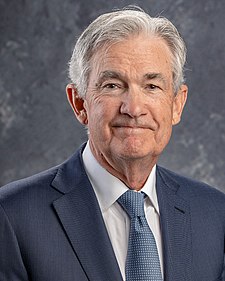
Powell described the U.S. economy as "generally strong," highlighting a robust labor market and stable GDP growth. However, inflation remains above the Federal Reserve’s 2% target. In response, the chairman struck a more hawkish tone, which could weigh on potential stock market growth next year. As a result, capital is flowing into safe-haven assets, reflected in record-high gold prices and a strong U.S. dollar.
Today’s focus will be on Powell’s next speech, which will be heavily influenced by the latest inflation data set to be released. Higher-than-expected inflation could further reinforce his hawkish stance on delaying rate cuts.

6. 1. 2025 - Josef Brynda
Donald Trump denied easing tariffs
Around noon Central European Time, an interesting event unfolded, highlighting a phenomenon often referred to as "Trump Trade." Washington News reported that Donald Trump planned to soften his pre-election stance on imposing tariffs on other countries as part of his protectionist policies. For details on the potential implications of such a move, refer to previously published articles on our profile.
This announcement triggered a reaction in the markets, causing the U.S. dollar to weaken by up to 1%. Investors adjusted their expectations, dismissing the possibility of inflationary policies linked to tariffs and the associated higher interest rates. However, shortly after 3 PM, Donald Trump himself denied these claims, prompting the dollar to recover by half a percent.
This situation perfectly exemplifies the unpredictability of "Trump Trade," where unexpected events often cause significant market swings. As Trump’s new term approaches, it’s clear that this period will be closely watched, requiring careful analysis and filtering of news to navigate the market effectively.

18. 12. 2024 - Josef Brynda
The Strength of the Dollar Should Continue: What Drives the Growth of the U.S. Currency?
The dollar remains one of the most closely watched assets in financial markets, even as the Federal Reserve (Fed) has decided to lower interest rates today. According to traditional macroeconomic theory, this move should weaken the dollar while boosting equities. However, in the current environment, the rate cuts were largely priced in, as evidenced by the CME FedWatch Tool – a key indicator of interest rate trends – which showed a 96% probability of this move.
Why, then, should the dollar maintain its strength despite today’s rate cut?
The key lies in the Fed’s rhetoric and forecasts, which have once again proven to be crucial for market direction. The Fed adjusted its outlook for 2025, now projecting only two rate cuts instead of the previously planned three. Additionally, it has reduced the scope of the cuts to 50 basis points (bps). Moreover, it raised its inflation forecast for 2025 from 4.25% to 4.5%. These changes suggest that the central bank will continue to closely monitor inflationary pressures and maintain a relatively tight monetary policy. These fundamentals support the dollar’s strength, as confirmed by investor sentiment.
How Will Donald Trump's Return Impact the Markets?
Donald Trump’s return to the presidency could bring additional dynamics for the dollar. At first glance, his administration might be seen as a positive signal, but the unpredictability of his policies could complicate the situation. For instance, deportation of the labor force could increase unemployment and reduce performance in key sectors, negatively affecting consumption. On the other hand, this move could boost inflation, as domestic labor is more expensive than workers from Mexico or other countries. Higher inflation could compel the Fed to adopt an even tighter monetary policy.
Another key factor will be the independence of the central bank during Trump’s administration. It will be critical to observe how the Fed maintains its independence, particularly with a new Fed Chair taking office. Trump has previously hinted at influencing the Fed via the U.S. government, which could create significant challenges for the credibility of the entire U.S. economy. Trump favors the lowest possible rates, which make borrowing cheaper in financial markets and support sectoral activity.
What to Expect from the Dollar in 2025?
Based on current fundamental data and investor sentiment, the dollar is expected to maintain its strength in 2025. Additionally, there is potential for the EUR/USD currency pair to reach parity, given the challenges faced by the Eurozone. This would further confirm the dollar’s dominance in global markets.
For investors, it remains critical to monitor not only economic data but also political developments in the U.S., as these will have a decisive impact on the future trajectory of the U.S. currency.

27. 11. 2024 - Josef Brynda
With Donald Trump leading in the polls ahead of the election, policymakers in Seoul were coming up with a game-plan. If Trump wins and threatens tariffs, then South Korea — which has the seventh-largest trade surplus with the US — could ramp up imports of American energy.
It would be a win-win: Korea could avoid tariffs, the trade imbalance might come down. European Commission President Ursula von der Leyen similarly pitched to Trump directly, after his victory, buying more US liquefied natural gas. In Mexico City, officials have been working to curb some Chinese imports to avert criticism that their nation was serving as a conduit for China goods to enter the American market.
One thing in common with all those approaches: they speak to economics. And, thinking back to Trump’s first term, that might have made sense. His escalatory rounds of tariffs on China came in the run-up to a Phase One trade agreement. He slapped levies on washing machines to aid US manufacturers.
Trouble is, Trump’s Monday evening bombshell announcement of tariffs on the top three sources of US imports — Mexico, China and Canada — were tied to nothing economic. The measures, to be set in an executive order when Trump takes office Jan. 20, were cast as necessary to clamp down on migrants and illegal drugs flowing across borders.